

Garment bags are functional products used to protect, transport and neatly store suits, evening gowns, wedding dresses, jackets and other special garments. The service life of garment bags, which protect clothing from dust, dirt, friction and environmental effects, depends on the care methods applied. A high-quality garment bag used correctly can maintain its protective properties for many years.
Garment bag care does not only mean cleaning the outer surface of the product. The storage environment, method of use, protection of zippers, moisture control and the condition of the garments placed inside the garment bag also directly affect the product’s lifespan. Thanks to simple but regular care habits, the form, appearance and functionality of garment bags can be preserved for a long time.
Why Is Garment Bag Care Important?
During use, garment bags constantly come into contact with clothes, hangers, wardrobe surfaces and carrying areas. Over time, these contacts may cause dust, dirt or slight deformation on the product surface. When regular care is not carried out, the fabric structure may weaken, zippers may become difficult to move and the garment bag may no longer protect clothing sufficiently.
A regularly maintained garment bag looks cleaner and performs its protective function for a longer period of time. The cleanliness of garment bags used to store delicate or valuable garments such as wedding dresses, evening gowns and suits is especially important. A carefully protected garment bag is also a natural reflection of the value given to the garment inside.
The Garment Bag Should Be Checked Before Use
Before using a garment bag, it is useful to check the general condition of the product. It should be examined whether the zipper works properly, whether there are any tears on the fabric surface and whether the carrying handles are strong. Especially in garment bags that have been kept unused for a long time, dust or moisture-related marks may appear on the surface.
A brief preliminary check can prevent possible damage to both the garment bag and the garment to be placed inside it. For example, if a stuck zipper is forced closed, it may cause the fabric to tear. Similarly, a sharp or broken hanger may damage the surface of the garment bag. A few minutes of checking before use can prevent bigger problems.
Clean and Dry Garments Should Be Placed Inside the Garment Bag
The garments to be placed inside the garment bag must be clean and completely dry. Storing used, sweaty or damp clothes directly inside the garment bag may cause unpleasant odors. Fabric stains, color changes or unwanted surface formations may occur in damp textile products that remain closed for a long time.
If the garment has come from dry cleaning, it may be useful to air it for a short time before placing it inside the garment bag. This helps reduce the smell of substances used during the cleaning process and ensures that the garment is completely dry. Storing a clean garment in a clean garment bag extends the lifespan of both the product and the protective cover.
Garment Bag Cleaning Should Be Done According to Material Type
Since not every garment bag is made from the same material, cleaning methods may also vary. It is not correct to apply the same cleaning process to garment bags made from non-woven, polyester, cotton fabric, PVC or different technical textiles. If the product has care instructions specified by the manufacturer, these instructions should be followed first.
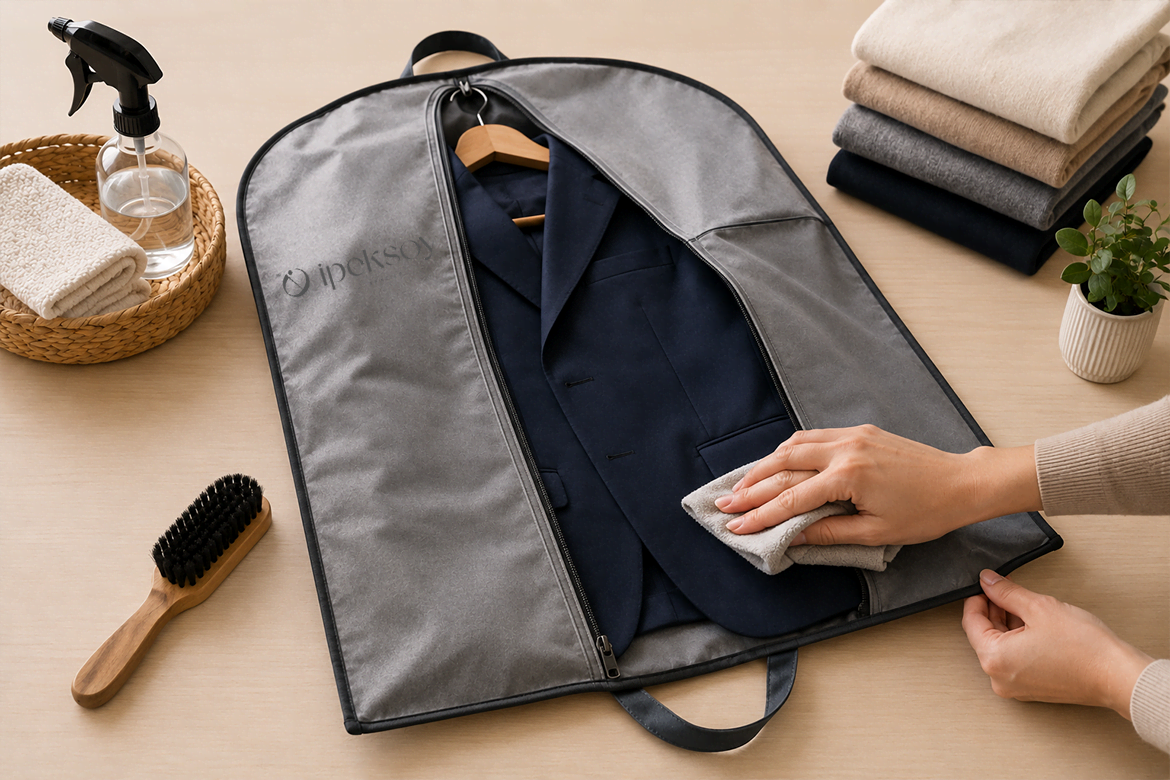
In general, a soft cloth or a low-power vacuum cleaner can be used for light dust. For local stains, a slightly damp cloth that does not damage the fabric may be preferred. Cleaning products containing strong chemicals, bleach and hard brushes may cause color loss, thinning or deformation on the surface of the garment bag.
Things to Consider When Washing a Garment Bag
For washable garment bags, water temperature, detergent amount and drying method should be chosen carefully. Very hot water may cause the product to shrink or damage the surface coating. Similarly, using too much detergent may leave residue on the fabric and transfer an unwanted odor to the garment stored inside the garment bag.
Garment bags that are not suitable for machine washing should never be placed in the washing machine. Zippers, transparent windows and rigid support areas may be damaged by machine movements. If hand cleaning is performed, the garment bag should not be wrung, twisted or pressed in a way that deforms its shape. Gentle cleaning is the safest way to preserve the structure of the product.
The Correct Drying Method Should Be Applied
A cleaned garment bag should not be used or folded for storage before it is completely dry. A garment bag closed while damp may create a suitable environment for bad odor and moisture accumulation. This can negatively affect not only the surface of the garment bag but also the garment that will later be placed inside it.
Drying should not be done directly under intense sunlight. Fabrics exposed to sunlight for a long time may experience color fading, hardening or deterioration in surface structure. The garment bag should be dried open in a ventilated and shaded environment. Leaving the zipper open helps the inner surface dry evenly as well.
Zipper Care Should Not Be Neglected
The zipper is one of the most frequently used and most easily damaged parts of garment bags. The zipper getting caught in the fabric, being pulled forcefully or being opened and closed quickly all the time may damage the teeth. When using the zipper, it should be ensured that the fabric is not caught in between and the movement should be carried out slowly.
Zippers that become difficult to move over time can be cleaned with appropriate methods. Dust accumulated between the zipper teeth can be removed with the help of a soft brush. Oils or random chemical substances that may damage the product should not be used. When a zipper problem is noticed early, a small repair can prevent more serious damage to the garment bag.
Carrying Handles and Stitches Should Be Checked Regularly
Carrying handles bear an important load, especially in garment bags that are folded and carried together with clothing. Placing excessively heavy products inside or pulling the garment bags harshly from their handles may cause the stitches to loosen. If small openings on the handles or connection points are not noticed in time, the product may tear completely.
Stitching areas should be checked at regular intervals and loosened areas should be repaired before the product continues to be used. Fixing a small stitching problem early can significantly extend the service life of the garment bag. During carrying, the garment bag should not be swung only by the handle; it should be held as balanced and controlled as possible.
Garment Bags Should Not Be Overfilled
Placing more clothes than the capacity of the garment bag can damage both the garment bag and the garments. In an overfilled garment bag, the zipper is strained, the stitches are stretched and the fabric surface remains under constant pressure. As a result, the product may lose its form or tears may occur at connection points.
Each garment bag should be used according to the garment type and capacity it was designed for. More than one heavy garment should not be placed in a model produced for a single suit. If more products need to be carried, garment bags designed for larger volume or multiple use should be preferred. Using the correct capacity preserves the durability of the product.
The Right Hanger Should Be Selected
The size and structure of the hanger used inside the garment bag directly affect the form of the product. Very wide, sharp-edged or broken hangers may stretch the garment bag fabric and cause deformation around the hanger opening. Thin hangers may not support heavy garments sufficiently, causing the garment to lose its shape.
Wide-shouldered hangers should be preferred for suits, non-slip surface hangers for dresses and durable hangers for heavy products. The hanger hook should be passed properly through the garment bag opening. Using the hanger at the wrong angle may cause tearing around the opening. Although it may seem like a small detail, hanger selection is important for both garment and garment bag care.
The Storage Environment of Garment Bags Should Be Chosen Correctly
Garment bags should be stored in dry, cool, clean and ventilated environments. Excessively humid areas may cause bad odors and deterioration on the fabric surface. Very hot environments may cause coatings, transparent windows or plastic details used in the garment bag to harden and lose their shape over time.
Garment bags should not be placed directly near radiators, stoves, air conditioner outlets or windows exposed to sunlight. Sufficient space should be left inside the wardrobe and products should not be overly compressed against each other. Completely preventing air circulation may cause unwanted odors, especially during long-term storage.
Ventilation Should Be Provided During Long-Term Storage
It is not correct to leave garments that will not be used for a long time inside garment bags for months without checking them. The garment bag should be opened at certain intervals, and the garment and inner surface should be aired for a short time. This process helps reduce moisture that may accumulate in the environment and allows possible problems to be noticed early.
During ventilation, the general condition of the garment, the inner surface of the garment bag and the hanger can be checked. If bad odor, moisture marks or stains are noticed, the necessary cleaning should be done before the product is stored again. Regular checks prevent unexpected problems when special occasion garments are taken out after a long time.
The Garment Bag Should Be Folded Correctly
Foldable garment bags should be folded correctly and stored when not in use. Randomly crumpling the product may create permanent marks on transparent windows, bend the zipper and deform the fabric. Folding should be done by following the product’s natural fold lines.
When folding the garment bag, care should be taken that the zipper is not fully closed under tension. Heavy boxes or other items should not be placed on top of it. Storing the product on a flat and clean surface ensures that it looks neat when used again. Correct folding habits preserve the professional appearance of garment bags for a long time.
Stains Should Be Treated Quickly
When liquid, dust or another substance gets on the surface of the garment bag, the stain should not be allowed to dry. Newly formed stains are usually easier to clean. Excess liquid should be absorbed by pressing on the stain with a clean and absorbent cloth, and the stain should not be rubbed harshly in a way that spreads it over the surface.
Before using a cleaning product, it is useful to test it on a small hidden area of the garment bag surface. This reduces the risk of color fading or surface deterioration. If the type of stain is unknown, it may be safer to seek professional cleaning support instead of using strong chemicals.
Small Damages Should Be Repaired in Time
Small tears, loosened stitches and zipper problems on the garment bag should not be ignored. A small damage may quickly grow during use and cause the product to become completely unusable. Damage around carrying handles and zippers especially requires early intervention.
While simple stitching problems can be reinforced with suitable thread, professional repair should be preferred for larger tears. During repair, a method suitable for the garment bag material should be used. A small intervention made in time provides economical and sustainable use by delaying the need to buy a new product.
It Should Be Protected from Chemicals and Sharp Objects
Perfume, deodorant, hair spray and cleaning products containing strong chemicals should not be applied directly to the surface of the garment bag. These substances may cause color changes, stains or deterioration of the surface coating. If perfume is to be applied to the garment, it should be allowed to dry completely before being placed inside the garment bag.
Scissors, needles, brooches and sharp accessories may also damage the surface of the garment bag. Sharp accessories on the garment should not directly contact the garment bag fabric. Accessories should be stored in a separate compartment or protective packaging. Reducing small risks around the garment bag prevents unexpected tears.
Printed Areas Should Be Protected on Corporate Garment Bags
On logo-printed and corporate-designed garment bags, printed areas reflect the brand value of the product. Wiping these areas harshly, keeping them under constant pressure during folding or exposing them to intense sunlight may cause the print to fade and crack.
When cleaning corporate garment bags, the logo area should be treated gently and abrasive products should not be used. During storage, the printed surface should not be folded inward harshly. Keeping the print vibrant for a long time helps garment bags preserve their professional appearance and brand representation power.
Economic and Environmental Benefits of Regular Care
Using garment bags for a long time with proper care reduces the need to purchase new products frequently. This provides a cost advantage for both individual users and textile companies. Especially for businesses that use garment bags in large quantities, regular care can help control product renewal costs.
Long-lasting use also contributes to reducing unnecessary consumption and waste generation. Keeping a product functional for as long as possible is one of the main elements of a sustainable consumption approach. A small amount of care shown to garment bags has a positive impact on both the budget and the environment.
For long-lasting garment bag use, cleaning, drying, storage and carrying processes must be managed carefully. Placing clean and dry garments inside the garment bag, avoiding forcing the zippers, not overfilling the product and storing it in a suitable environment are among the basic care practices.
A garment bag that is regularly checked and used under proper conditions can safely protect clothing for many years. The care shown to the product not only extends the lifespan of the garment bag but also ensures that valuable garments remain clean, organized and ready for use. Simple care habits provide significant protection and savings in the long term.
Do Comment