

What Is a Garment Bag?
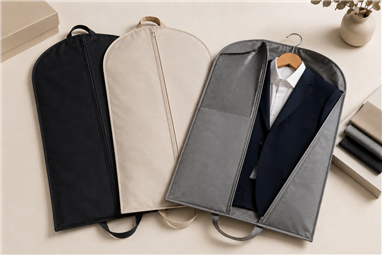
A garment bag is a special clothing cover used to protect, transport and neatly store textile products such as suits, evening gowns, wedding dresses, jackets, shirts, dresses and similar garments. Also commonly referred to as a clothing cover or garment carrier, garment bags help prevent textile products from being damaged by external factors. Thanks to their hanging structure, they allow garments to be carried without being folded, helping preserve the form of the product.
Garment bags should not be considered only as packaging products. A high-quality garment bag serves a protective function throughout the process from production to delivery to the end user. It provides a safe storage area especially for garments made from delicate fabrics, items that wrinkle easily or clothing with special craftsmanship. Ensuring that a garment reaches its owner while preserving its original appearance is highly important for both customer satisfaction and brand reputation.
Main Features of Garment Bags
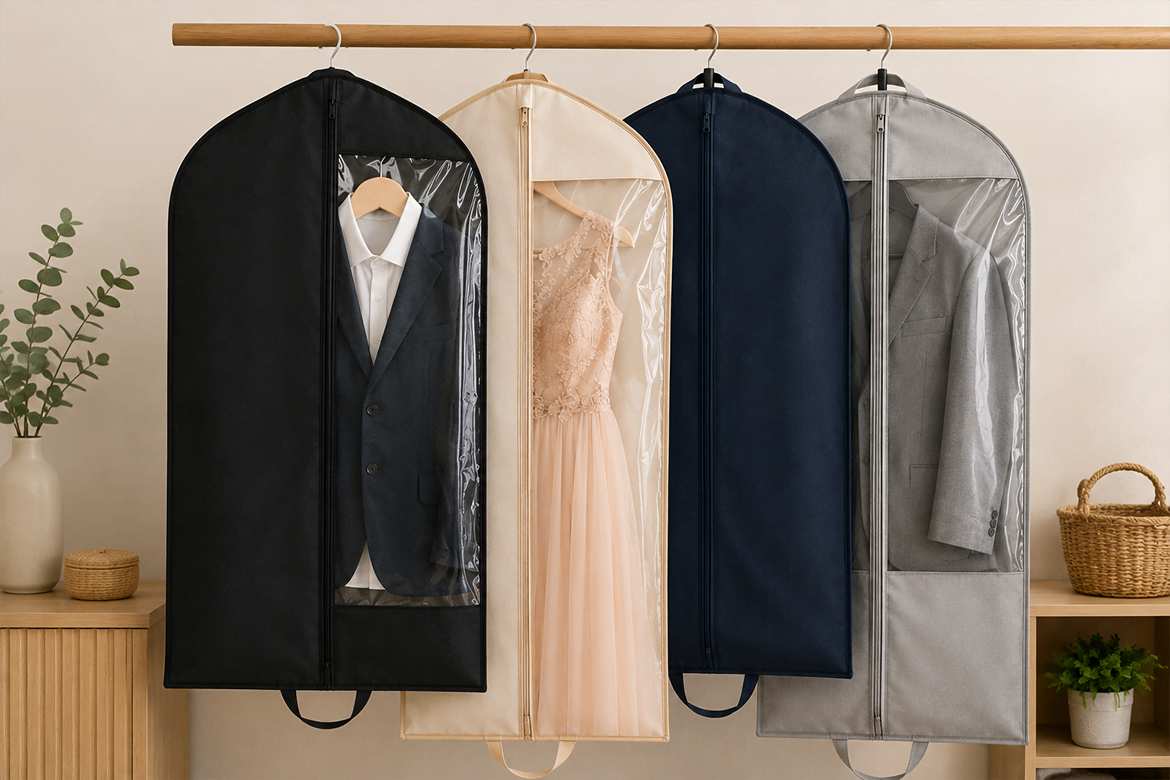
The most important feature of garment bags is that they protect clothing from external factors such as dust, dirt, moisture, sunlight and friction. Models with zippers, snap fasteners or open-bottom structures can be designed according to different usage needs. Some garment bags may include handles for easy carrying, hanger openings, transparent windows or accessory compartments. These features make the product both functional and user-friendly.
The dimensions and designs of garment bags may vary depending on the type of garment to be carried. While more standard sizes are preferred for suits, wider and longer models may be used for wedding dresses, evening gowns and long dresses. A garment bag prepared in dimensions suitable for the form of the product prevents the garment from being compressed, folded or deformed. Therefore, not only appearance but also intended use should be considered when choosing a garment bag.
What Materials Are Garment Bags Made From?
Materials such as interlining, non-woven fabric, polyester, cotton fabric, PVC and various technical textile materials can be used in garment bag production. The material to be used is determined according to the product’s usage period, the characteristics of the garment to be carried and the brand’s quality expectations. While non-woven fabrics are preferred for lightweight and economical products, woven fabric or polyester-based materials may be used for more durable and long-lasting use.
Material selection directly affects the protective level of garment bags. Breathable fabrics help air circulation during long-term storage of garments, while water-resistant surfaces can provide additional protection during transportation. Transparent or semi-transparent sections allow the garment inside to be easily seen. When the right material is preferred, the garment bag both protects the clothing and improves the user experience.
What Are the Usage Areas of Garment Bags?
Garment bags are used in many areas of the textile and ready-to-wear industry. Suit manufacturers, fashion brands, bridal stores, dry cleaning businesses, tailors, theaters, hotels and event companies regularly benefit from garment bags. These products help garments to be safely transported from the production area to the store, from the store to the customer or to an event venue.
Individual users can also use garment bags to organize wardrobes, store seasonal clothing or protect special garments during travel. Garment bags are a highly practical solution especially for people who travel frequently, wear suits in business life or want to store special occasion clothing for a long time. A regularly used high-quality garment bag helps extend the life of valued garments.
Use of Garment Bags in the Textile and Ready-to-Wear Industry
In the textile industry, garment bags are one of the important complementary elements of production and shipment processes. They ensure that completed garments remain clean and organized during storage, delivery to stores and handover to customers. Brands with high quality standards want to differentiate their products not only through production quality but also through presentation. At this point, a professional garment bag becomes an important detail that supports the value of the product.
Garment bags used in the ready-to-wear industry can be customized in line with the brand’s corporate identity. Details such as color, logo, printing, zipper and carrying handle can be prepared according to the brand design. In this way, the garment bag goes beyond being merely a protective product and becomes part of the communication established between the brand and its customer. A carefully prepared garment bag can create a sense of quality and trust in the customer and make the purchasing experience more special.
The Role of Garment Bags in Individual Use
Garment bags are functional products that help maintain wardrobe organization at home. Evening gowns, suits, coats, jackets and special occasion garments that are not used frequently can be stored neatly inside garment bags. This structure, which prevents clothing from coming into direct contact with other products, helps keep fabric surfaces clean and preserve colors.
Garment bags used during travel can reduce the compression or wrinkling of clothes inside luggage. Foldable models with carrying handles allow special garments such as suits or dresses to be transported more easily. Keeping clothing neat when attending an important meeting, wedding or invitation gives the person confidence. This seemingly small detail can make the preparation process more comfortable and controlled.
Advantages of Using Garment Bags
The main advantage of using garment bags is that they protect clothing from external factors. Dust, dirt, friction and environmental conditions can negatively affect the appearance of textile products over time. Garments stored inside garment bags remain cleaner, more organized and ready for use. This is an important advantage especially for garments that require care or have high monetary value.
Garment bags also make transportation and storage processes easier. Thanks to their hanging structure, clothes can be hung without being folded, and the product inside can be easily identified through transparent sections. In corporate use, classifying products, preparing them for shipment and presenting them to customers in an orderly manner becomes easier. This saves time and creates a more professional workflow.
Garment Bags in Terms of Product Protection and Hygiene
Textile products may pass through many different environments from production to the point of sale. During storage, transportation, in-store display and customer delivery, products may be exposed to dust or dirt. The use of garment bags helps reduce these risks by creating a protective layer between the garment and the external environment. This protection is especially important for light-colored, delicate or easily stained fabrics.
In terms of hygiene, garment bags limit the direct contact of garments with surrounding products and surfaces. They can be used to preserve the cleanliness of garments after dry cleaning or to deliver store products to customers in an orderly manner. However, garment bags should also be stored in clean, dry and suitable conditions. When used correctly, a garment bag supports the hygienic appearance of the garment and safe storage conditions.
Contribution to Brand Image and Corporate Presentation
How a product is presented to the customer can be as impressive as the product itself. Delivering a high-quality garment in ordinary or careless packaging may weaken the customer’s perception of the brand. On the other hand, using a durable and stylish garment bag with a corporate design strengthens the value of the product. The customer feels that the brand pays attention not only to production but also to the details of the delivery process.
Logo-printed garment bags can also be considered functional promotional products that increase brand visibility. When the customer reuses the garment bag, the brand logo becomes visible in different environments. This can create a long-term and natural advertising effect. When aesthetic design, correct color usage and high-quality material selection come together, the garment bag becomes a strong corporate element that completes the brand identity.
What Should Be Considered When Choosing the Right Garment Bag?
When choosing a garment bag, the dimensions of the garment to be carried or stored should be considered first. If the product is too narrow, it may cause the garment to be compressed and wrinkled; if it is larger than necessary, it may reduce carrying convenience. The length, width and hanger section should be suitable for the form of the garment. Choosing different sizes for different product groups such as wedding dresses, evening gowns, suits and jackets provides better results.
Material quality, stitching structure, zipper durability and carrying details should also be evaluated during the selection process. For garment bags intended for long-term use, durable fabrics and strong connection points should be preferred. In corporate use, printing quality and design consistency should not be overlooked. A garment bag selected according to its intended use protects the garment while providing long-term convenience for the user.
The Importance of Garment Bags in Terms of Sustainability
Reusable garment bags can help reduce the need for single-use packaging. A garment bag made from durable materials can be used for storing and transporting different garments for a long time. This provides an economic advantage for the user and helps prevent unnecessary packaging consumption.
From a sustainability perspective, material selection and production quality are highly important. Garment bags made from long-lasting, recyclable or lower-impact materials can support a more conscious consumption approach. Brands should consider not only aesthetic appearance but also the product’s lifespan. A high-quality and reusable garment bag can be a concrete indicator of an environmentally conscious brand approach.
Garment Bag Care and Storage Conditions
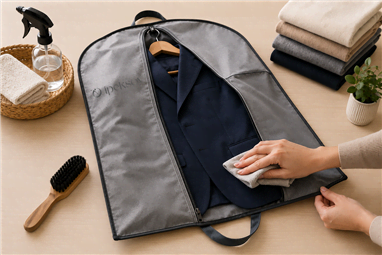
Garment bags should be kept in clean and dry environments in order to be used for a long time. After use, it should be ensured that no moisture remains inside the garment bag, and the product should not be exposed directly to intense sunlight or high temperatures. Cleaning methods suitable for the fabric structure should be preferred, and dirt that may form on the product surface should be cleaned carefully.
It is also important that the garments placed inside the garment bag are completely clean and dry. Leaving damp or dirty clothes in a closed environment for a long time may cause unpleasant odors and unwanted changes on the fabric surface. Garment bags that are regularly checked and stored under proper conditions help preserve both the garment inside and their own structure for a long time.
A garment bag is a functional textile product used to protect, transport, organize and professionally present clothing. It has a wide range of uses, from textile manufacturers and fashion brands to dry cleaning businesses and individual users. While protecting garments from dust, dirt, friction and environmental factors, it also makes transportation and storage processes easier.
A garment bag produced with the right material, suitable dimensions and quality workmanship not only protects the garment but also makes the value given to the product visible. It is just as important to store and deliver a garment with care as it is to prepare it carefully. Therefore, garment bags offer a small yet highly effective solution both in daily life and in the professional textile industry.
Do Comment